
How to Read a Seller Disclosure Statement in Washington State
Introduction
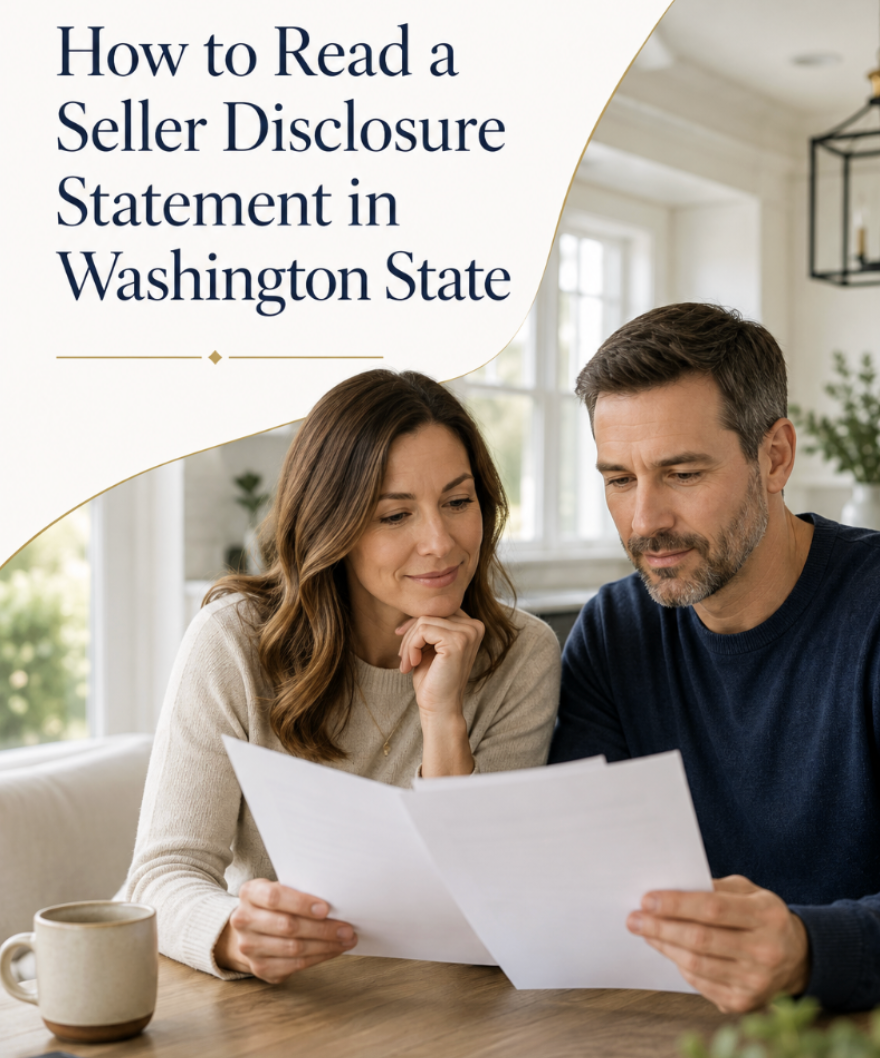
A buyer once handed me her copy of a seller disclosure statement with a slightly worried look, pointing to a page full of yes and no boxes and asking me honestly, what am I actually supposed to do with this? It is one of the most common questions I hear from first time buyers, and it deserves a real, clear answer, because this document tells you far more than most buyers realize, if you know how to actually read it.
I have reviewed hundreds of these disclosures alongside my clients over the years, as a buyer's advocate helping interpret them carefully. I want to walk you through exactly what this document is, what it is not, and how to use it wisely, whichever side of the transaction you are on.
What Form 17 Actually Is
In Washington state, most sellers of residential real property are required to complete a Seller Disclosure Statement, commonly known as Form 17, under state law RCW 64.06. This document asks the seller a structured series of yes, no, or don't know questions about the property's condition and history, and requires an explanation for any yes answer.
It is genuinely important to understand what this document is not. As one clear local explanation puts it, Form 17 does not guarantee condition, it documents what the seller is actually aware of at the time of disclosure, and the key word throughout the entire document is known. This is not a home inspection, and it is not a warranty. It is the seller's honest account of what they personally know, nothing more and nothing less.
What the Document Actually Covers
Form 17 is organized into several categories covering the most important aspects of a property's condition and history. Recent guidance describes the form's structure clearly, noting that it runs several pages and covers seven categories of property condition, built entirely around a single legal standard, the seller's actual knowledge, including sections on title matters, home systems like water and structural elements, permits, environmental issues, and homeowners association matters.
Each section walks through specific, pointed questions, boundary disputes or encroachments, known structural issues, water intrusion or moisture problems, permit history for any additions or renovations, and environmental concerns like known soil or drainage issues. For any question answered yes, the seller must provide a written explanation, giving buyers real, specific insight into the property's actual history rather than a vague generalization.
The Legal Standard Behind the Form
The single most important concept to understand about Form 17 is the actual knowledge standard. Recent legal guidance explains this plainly, noting that Washington law protects sellers from liability when they had no actual knowledge of an error, inaccuracy, or omission, and importantly, sellers do not have a legal duty to inspect their own property before completing this disclosure.
This distinction matters enormously for buyers to understand. A seller is not required to hire an inspector before filling out this form, and a seller who genuinely did not know about a hidden issue, one that never surfaced during their ownership, has not violated the law by failing to disclose something they were never actually aware of. This is precisely why Form 17 works best as one part of your due diligence, alongside a genuine professional inspection, rather than as a substitute for one.
Your Rights as a Buyer
Washington law provides buyers with genuine, meaningful protection around this document. The seller is generally required to deliver the completed disclosure within five business days of mutual acceptance, unless this requirement has been waived. Once you receive the fully completed statement, you generally have three business days to review it and, if you choose, rescind your purchase agreement entirely, recovering your earnest money in the process.
This window exists specifically so that new information revealed in the disclosure does not trap you in a purchase you would not have agreed to with full knowledge. I always encourage buyers to read this document closely and promptly, rather than setting it aside, precisely because that rescission window is real but genuinely time limited.
What to Watch for as a Buyer
Beyond simply reading the yes and no answers, I encourage buyers to pay close attention to the explanations provided for any yes response, since vague or minimal explanations sometimes warrant a direct follow up question through your agent before you move forward. I also encourage a healthy dose of thoughtful curiosity toward a disclosure that comes back entirely clean, with no yes answers at all, particularly on an older home. This does not automatically mean anything is being hidden, and it is also a genuinely reasonable prompt to ensure your independent inspection is thorough, since a completely spotless disclosure on a decades old home is somewhat less common than most buyers assume.
What Sellers Need to Understand
If you are selling, my most important advice is simple and consistent every single time. Answer every question honestly, based on your genuine knowledge, even when a particular answer feels uncomfortable to disclose. A seller who knowingly omits or misrepresents a material fact can face real legal liability after closing, while a seller who discloses honestly, even imperfect information, is protected by the very same law that requires the disclosure in the first place.
A well completed disclosure genuinely protects you just as much as it informs the buyer.
Are There Exemptions to This Requirement
Certain transactions are exempt from the standard Form 17 requirement, including estate sales, In Washington State, RCW 64.06.010 outlines specific exemptions where a seller is not required to fill out Form 17 (the Residential Real Property Disclosure Statement). Common exemptions include foreclosure sales, transfers between close family members or spouses during a divorce, and estate sales managed by personal representatives who have no personal knowledge of the property. Buyers considering a property that falls under one of these exemptions should understand that reduced formal disclosure makes a thorough, professional inspection even more important as part of their due diligence process.
Frequently Asked Questions
What is Form 17 in Washington real estate?
Form 17 is Washington state's legally required Seller Disclosure Statement for most residential real estate transactions, required under RCW 64.06. It documents what the seller actually knows about the property's condition, based on their genuine knowledge at the time they complete the form.
What does a seller have to disclose in Washington state?
Sellers must disclose known material facts across several categories, including title matters, home systems, permits, environmental issues, and homeowners association concerns, answering a structured series of yes, no, or don't know questions and explaining any yes response.
How long do buyers have to rescind after receiving Form 17?
Buyers generally have three business days after receiving the fully completed disclosure statement to review it and, if they choose, rescind their purchase agreement while recovering their earnest money.
Is a seller disclosure statement the same as a home inspection?
No, Form 17 is the seller's own account of what they know about the property, not a professional inspection or a warranty of condition. It works best when paired with a genuine, independent home inspection rather than used as a substitute for one.
What happens if a seller does not disclose a known issue?
If a seller had actual knowledge of a material issue and knowingly failed to disclose it, they may face legal liability after closing. However, sellers are not liable for issues they genuinely did not know about, since Washington law is built around an actual knowledge standard.
Are there exemptions to the Form 17 requirement?
Yes, certain transactions are exempt, including estate sales, foreclosures, and transfers by banks or trustees, or sales by sellers who never occupied the property. Buyers in these situations should place extra emphasis on a thorough, independent inspection.
Ready to Talk?
If you are looking to buy or sell, let's chat.
Cheryl Dillon is a Realtor in the greater Seattle area helping buyers and sellers navigate life transitions with clarity, strategy, and a genuinely personalized approach.
📞 425-954-5622 📧 Cheryl@CherylDillonRealEstate.com 🌐 CherylDillonRealEstate.com 📍 1455 Leary Way #400, Seattle, WA 98107
Cheryl Dillon is a licensed REALTOR® in the state of Washington with EXP Realty.
Categories
Recent Posts






GET MORE INFORMATION