
Living in Lynnwood WA: The Light Rail Effect and Why The City Is Quietly Winning
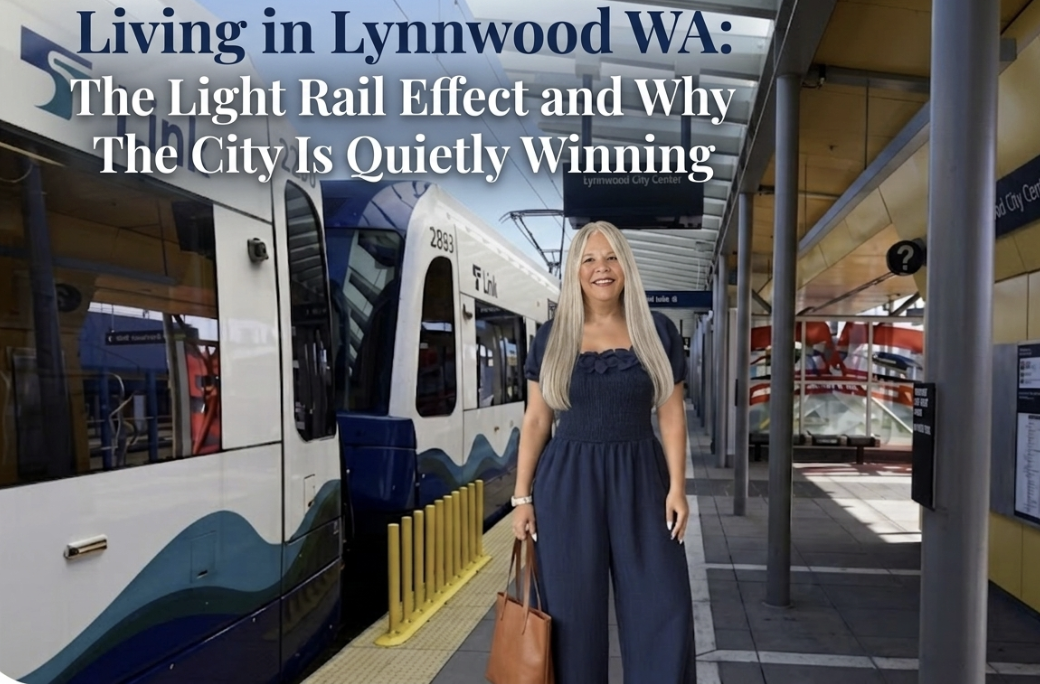
The City That Is Quietly Winning
Every few years, a community in the greater Seattle area reaches a turning point where everything that made it quietly appealing suddenly becomes impossible to ignore. Right now, in the summer of 2026, that community is Lynnwood.
I have lived in the Pacific Northwest for over 40 years. I grew up here, raised my family here, and have spent decades working in the communities that make up the North Corridor of the greater Seattle area. I have watched neighborhoods evolve, watched new infrastructure change the daily math of where people choose to live, and watched buyers discover communities they had overlooked for years and wonder why it took them so long.
Lynnwood is in that moment right now. And the buyers who recognize it earliest are the ones who will look back in five years and feel very good about the decision they made.
The Lynnwood Link light rail extension is now fully operational, connecting Lynnwood City Center Station directly to the University District, South Lake Union, Capitol Hill, and downtown Seattle. That single infrastructure fact has changed the equation for this community in ways that are already showing up in the data. Lynnwood is leading the entire North Corridor in year-over-year home value appreciation as of mid-2026, with values up meaningfully while many surrounding communities are flat or softening.
This blog is for buyers who are seriously considering Lynnwood and want an honest, experienced, local perspective on what it is actually like to live here, what the market looks like right now, and whether this community belongs in their search.
Cheryl Dillon is a Realtor in the greater Seattle area helping buyers and sellers navigate King and Snohomish County markets with clarity, strategy, and a genuinely personalized approach.
What Lynnwood Actually Is
Lynnwood is a city of approximately 45,000 people in southwestern Snohomish County, sitting just north of the King County line and immediately east of Edmonds. It is bordered by Mountlake Terrace to the south, Edmonds to the west, Kenmore and Kenmore to the southeast, and Shoreline and Brier to the surrounding areas.
For many years, Lynnwood's identity in the greater Seattle consciousness was shaped primarily by Alderwood Mall and the tangle of arterials surrounding it. That reputation was never quite fair to what the city actually offered, and it is increasingly outdated as the Lynnwood City Center development transforms the urban core into something genuinely walkable, livable, and connected.
What Lynnwood has always had, and what buyers who looked past the surface always found, is a strong combination of practical value drivers: the Edmonds School District, which is one of the most respected public school systems in Snohomish County; straightforward access to I-5 and I-405 for multiple employment corridors; housing stock at price points that made the Eastside and South King County feel expensive by comparison; and a community that has been quietly investing in itself for years in preparation for exactly the moment it is now experiencing.
The light rail connection is not creating something from nothing. It is amplifying fundamentals that were already there.
The Light Rail Effect: What It Means for Buyers and Homeowners
The Lynnwood Link extension is the most consequential infrastructure investment in Snohomish County in a generation, and understanding what it does to residential real estate values is essential for anyone making a buying decision in this community.
Here is the core mechanic: light rail expands the effective employment access of a neighborhood without adding commute friction. A buyer in Lynnwood who works in South Lake Union, the University District, or Capitol Hill can now reach those employment centers without sitting in I-5 traffic. That changes the fundamental calculation of where to live.
Before light rail, a buyer choosing between Lynnwood and a Capitol Hill apartment was essentially choosing between affordability and commute time. The monthly savings in Lynnwood were real, and the commute cost in both time and stress was also real. Light rail removes that trade-off. The buyer in Lynnwood now has the financial benefits of Snohomish County pricing and the commute experience of a transit rider who steps off in Capitol Hill in roughly half an hour.
That is a powerful value proposition. And historically, transit-adjacent real estate has outperformed comparable non-transit-adjacent properties over the long term in every major American market where similar connections have been built. The Seattle area's own history with light rail supports this. Property values near established light rail stations in Seattle, the Eastside, and the South King County corridor have consistently commanded premiums relative to comparable homes further from stations.
Lynnwood is now in the early innings of that appreciation arc. The station is open, the service is running, and buyers are beginning to connect the dots between what Lynnwood costs today and what transit adjacency has done to values in other communities over five to ten year periods. The buyers moving into Lynnwood right now are not chasing the peak. They are arriving at the beginning of a value story that has meaningful room to develop.
The Neighborhoods of Lynnwood: Where to Look
Lynnwood's housing stock is diverse, and the experience of living here varies meaningfully depending on where you land. Here is an honest overview of the areas buyers are most actively considering.
Lynnwood City Center and Transit-Adjacent Corridors
The area surrounding Lynnwood City Center Station is the most actively transforming part of the city. New mixed-use development, improved streetscaping, and growing retail and dining options are creating a walkable urban core that did not exist here five years ago. Condominiums and townhomes in this area carry a premium relative to the broader Lynnwood market for good reason: they offer the highest transit walkability score in the city and sit closest to the light rail connection that is driving the community's appreciation story.
For buyers who prioritize urban walkability and transit access above all else, the City Center corridor is the right focus area in Lynnwood. Inventory here is limited relative to demand, and that supply constraint is one of the factors supporting value over time.
Established Single-Family Neighborhoods
West of Highway 99 and throughout the interior of Lynnwood, buyers find established single-family neighborhoods with mature tree canopies, larger lots than newer construction communities typically offer, and a neighborhood feel that surprises buyers who arrive expecting a purely commercial character.
These neighborhoods attract families who want the Edmonds School District, a genuine yard, and a home with the kind of character that newer construction rarely replicates. Pricing here is among the most competitive in Snohomish County relative to what the school district, the lot sizes, and the proximity to employment corridors would command in almost any other Seattle-area community.
Newer Construction and Townhome Communities
The eastern portions of Lynnwood and the areas near the Kenmore and Mountlake Terrace borders have seen significant townhome and newer attached housing development in recent years. These communities attract first-time buyers and downsizers who want updated finishes, lower maintenance, and a price point below the detached single-family market. The trade-off is lot size and the HOA structure that most attached communities carry, and buyers who make this choice with clear eyes on those trade-offs tend to be well satisfied.
The Schools: Edmonds School District
The Edmonds School District is one of Lynnwood's most durable value drivers, and it deserves direct attention from any buyer with school-age children.
The Edmonds School District serves students across Lynnwood, Edmonds, Mountlake Terrace, Kenmore, Shoreline, and surrounding communities. It is consistently recognized as one of the stronger public school systems in Snohomish County, with campuses that have earned strong academic outcomes, active parent communities, and extracurricular programs that attract families from across the region.
For buyers choosing between Lynnwood and communities served by different school districts, the Edmonds School District is a meaningful point of differentiation. The structural demand it creates from family buyers is one of the reasons Lynnwood's residential resale market has proven more resilient than many surrounding communities in periods of broader market softening.
The Commute Picture
The commute story in Lynnwood in 2026 is fundamentally different from what it was three years ago, and that difference is the light rail connection.
For buyers whose employment is in the Seattle urban core, the South Lake Union tech corridor, the University District, or Capitol Hill, the Lynnwood Link light rail extension offers a commute experience that has no comparison in any other Snohomish County community. The train runs frequently, connects directly to the major employment nodes without a transfer, and removes the I-5 variable from the daily equation entirely.
For buyers whose employment is on the Eastside in communities like Kirkland, Redmond, or Bellevue, the commute picture is different. Lynnwood sits west of the I-405 corridor, and Eastside commutes require either highway driving or a connection through the light rail system that adds time. Buyers with Eastside employment should evaluate Lynnwood's location relative to their specific workplace before committing, and communities along the I-405 corridor in Bothell and Kenmore may offer a more direct solution for that employment pattern.
For buyers who work from home either full-time or on a hybrid schedule, Lynnwood's value proposition is particularly strong. The commute variable is minimal, the price-per-square-foot advantage relative to urban Seattle and Eastside communities is meaningful, and the lifestyle of the North Corridor, including access to trails, parks, and the Edmonds waterfront just minutes away, is genuinely excellent.
Lynnwood vs. Edmonds: The Honest Comparison
This is the comparison buyers most frequently ask me to make, and it deserves a direct answer.
Edmonds offers waterfront access, a ferry dock, a more established walkable downtown with a stronger arts identity, and a community character that has been building for decades. It also carries a meaningfully higher price point, with supply constraints rooted in its geography that Lynnwood does not share. For buyers who prioritize the Edmonds lifestyle above all other variables and have the budget to access it, Edmonds earns its premium.
Lynnwood offers most of what makes the North Corridor appealing, at a price point that is significantly more accessible, with the addition of the light rail connection that Edmonds currently does not have. For buyers who are choosing between the two communities and are running the financial math honestly, Lynnwood's value-per-dollar is difficult to argue against in the current market. The lifestyle difference is real and the price difference is also real, and the question of which matters more is genuinely personal.
What I tell buyers who are on the fence between these two communities is this: spend a Saturday in each of them. Walk the streets, have a meal, sit somewhere with a view. The answer usually becomes clear from lived experience in a way that no comparison chart can fully replicate.
What the Market Looks Like Right Now
Lynnwood is leading the North Corridor in year-over-year appreciation as of mid-2026, and that is not an accident. It is the output of the transit adjacency premium beginning to express itself in prices that had not yet fully priced in the light rail connection.
Residential resale homes in Lynnwood are seeing the strongest buyer demand of any property type in the community. Well-priced, well-prepared single-family homes in the Edmonds School District are moving and in some cases generating competition from multiple buyers. Buyers who have done their research on what light rail has done to comparable communities elsewhere arrive in Lynnwood with a clarity of conviction that supports decisive offer writing.
Condominiums and townhomes are offering more negotiating room, consistent with the broader Snohomish County pattern where attached housing has given buyers more leverage than the detached market. For buyers whose lifestyle and budget align with attached housing, this is a window to negotiate terms and conditions that were not available in recent peak-market years.
New listings in Lynnwood have increased meaningfully year over year, which means buyers have more choices than they did at the height of the 2021 to 2022 surge. The homes that are sitting are the ones that are overpriced for their condition or that have deferred maintenance buyers are not willing to absorb at current prices. Well-prepared homes are not sitting.
For sellers in Lynnwood, the current environment rewards exactly the preparation I recommend for every listing I take: a pre-listing inspection, targeted repairs that add genuine value, professional photography, and pricing grounded entirely in current market evidence rather than peak-year memory or online estimate tools.
The Lifestyle: What Daily Life in Lynnwood Actually Feels Like
I want to be honest with buyers about something that does not always come through in real estate content: Lynnwood's lifestyle is practical and community-oriented in ways that some buyers find exactly right and others find less compelling than communities with a stronger waterfront or arts identity.
What Lynnwood does well is daily life infrastructure. The access to shopping, healthcare, dining, and services in and around Alderwood Mall and the broader commercial corridors is genuinely excellent. The Interurban Trail, which runs through the community and connects to a broader trail network across Snohomish County, offers outdoor access that casual listings descriptions undersell. Meadowdale Beach Park and the broader network of green spaces in and around Lynnwood provide genuine outdoor recreation without requiring a drive to a trailhead.
What Lynnwood does not have is the small-town waterfront identity of Edmonds, the wine-country character of Woodinville, or the urban density of a Capitol Hill or Ballard. Buyers who specifically need that kind of identity in their daily environment should be honest with themselves about whether Lynnwood's more pragmatic character will satisfy them long-term. Buyers who prioritize value, school district quality, transit access, and a community that works well at the level of daily life will find Lynnwood a very strong fit.
A Story From a Buyer Who Found Lynnwood
I recently worked with a couple who had been searching across three North Corridor communities for several months. Both partners commuted to jobs in the University District, and they had been doing the calculation on driving versus transit for longer than they wanted to admit. They had originally been focused on Edmonds because of the lifestyle appeal, and the gap between what they loved about Edmonds and what they could comfortably afford was a source of genuine tension in their search.
We had an honest conversation about what the light rail connection meant in practical terms for their daily life. The time math was straightforward: their commute by light rail from Lynnwood City Center to the University District was reliably faster than driving from Edmonds on any day with meaningful traffic. The price comparison meant they could afford a three-bedroom home in an Edmonds School District neighborhood in Lynnwood for what a two-bedroom would cost them in Edmonds proper.
They are in their home now. And the thing they tell me most often when we speak is that the light rail commute has changed their daily experience of life in a way they did not fully anticipate from the outside. That commute time is time they have back. And the home they bought, in a neighborhood they love, is worth more today than it was when they closed.
That is the Lynnwood story in 2026.
Frequently Asked Questions
Is Lynnwood WA a good place to live?
Lynnwood is an excellent choice for buyers who value school district quality, transit access, practical daily life infrastructure, and a price point that offers meaningful value relative to Eastside and urban Seattle communities. The Lynnwood Link light rail connection has added a commute advantage that fundamentally changes the community's appeal for buyers whose employment is in the Seattle urban core. It is a community that rewards buyers who evaluate it on the full picture rather than on surface impressions.
How has light rail affected home prices in Lynnwood?
Lynnwood is leading the North Corridor in year-over-year home value appreciation in mid-2026, which is a direct reflection of the transit-adjacency premium beginning to express itself in market pricing. Historically, light rail access has added measurable long-term premiums to residential values in every Seattle-area community where comparable connections have been built. Buyers purchasing in Lynnwood now are doing so in the early stages of that appreciation arc.
What school district is Lynnwood WA in?
Lynnwood is served by the Edmonds School District, one of the most respected public school systems in Snohomish County. The district serves students across Lynnwood, Edmonds, Mountlake Terrace, Kenmore, and surrounding communities and is a primary driver of durable buyer demand in the community.
What is the commute from Lynnwood to Seattle?
Via the Lynnwood Link light rail extension, buyers can reach Capitol Hill, the University District, South Lake Union, and downtown Seattle in approximately 30 to 45 minutes without driving. By car, the commute on I-5 varies significantly with traffic conditions. For buyers whose employment is in the Seattle urban core, the light rail commute is now the more reliable and often faster option.
How does Lynnwood compare to Edmonds?
Edmonds offers a waterfront identity, ferry access, a more established walkable downtown, and a premium price point that reflects those amenities and its geographic supply constraints. Lynnwood offers most of what makes the North Corridor appealing at a more accessible price point, with the addition of the light rail connection Edmonds currently lacks. The right choice between them depends on which lifestyle elements matter most and what the honest financial picture supports. Spending time in both communities before deciding is the most reliable way to reach clarity.
Is now a good time to buy in Lynnwood WA?
For buyers whose lifestyle and employment situation aligns with what Lynnwood offers, the mid-2026 environment is a compelling entry point. More inventory than the peak years means more choices and more negotiating room. Light rail is operational and values are beginning to reflect transit adjacency in a way that leaves meaningful upside for buyers entering now. Well-priced, well-prepared homes are still moving, which means the market is active without the all-or-nothing pressure of the 2021 to 2022 environment.
Ready to Explore Lynnwood?
Whether you are a first-time buyer running the numbers on light rail access and school districts, a relocating family evaluating the North Corridor, or a current homeowner in Lynnwood wondering what your home is worth in this market, I am happy to have a real conversation. No pressure. No pitch. Just honest guidance from someone who has worked in these communities for decades.
Cheryl Dillon is a Realtor in the greater Seattle area helping buyers and sellers navigate life transitions with clarity, strategy, and a genuinely personalized approach.
📞 425-954-5622 📧 Cheryl@CherylDillonRealEstate.com 🌐 CherylDillonRealEstate.com 📍 1455 Leary Way #400, Seattle, WA 98107
Cheryl Dillon is a licensed REALTOR® in the state of Washington with EXP Realty.
Categories
Recent Posts










GET MORE INFORMATION