Thinking About Going Car-Free in Seattle?
 Thinking About Going Car-Free in Seattle?
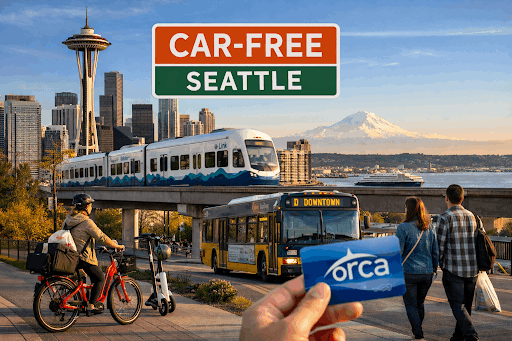
You’re not alone. With walkable neighborhoods, expanding light rail, and reliable bus service, many Seattle residents rely on transit, biking, and walking for most of their daily life.
In this guide, you’ll learn what car-free living actually looks like here, where it works best, where it takes more planning, and how to decide if it fits your routine.
What Car-Free Living Really Looks Like
Seattle is a mix of ultra-walkable pockets and more car-dependent areas. Neighborhoods like Downtown, Capitol Hill, Belltown, First Hill, South Lake Union, Ballard, Fremont, Columbia City, and parts of West Seattle make daily errands manageable without a car.
Outlying neighborhoods and many Eastside suburbs require more coordination, especially if your commute, school, or childcare spans multiple areas.
Most residents take a hybrid approach: transit and biking during the week, rideshare or carshare when needed.
Transit That Shapes Daily Life
King County Metro buses cover most of the city, with RapidRide lines offering faster, frequent service.
Link light rail is the north–south backbone, ideal for downtown, medical centers, and major job hubs.
Streetcars and the Monorail help with short urban connections.
Ferries and the Water Taxi offer scenic and practical commuting options for some waterfront residents.
Dockless e-bikes, scooters, protected bike lanes, and trails like the Burke-Gilman make two-wheeled travel increasingly realistic even with hills.
Daily Logistics Without a Car
Groceries? Walk, bike, or use delivery for heavier items.
Kids? Many families go car-free with nearby schools and cargo e-bikes.
Big errands? Carshare, rentals, or delivery services fill the gap.
Rain and hills are part of the lifestyle but with the right gear, most residents adapt quickly.
Costs + Tradeoffs
Owning a car in Seattle can cost thousands per year when you factor in insurance, fuel, parking, and maintenance. Living in a walkable neighborhood may cost more in housing, but many households find the trade-off worth it.
Is It Right for You?
If your commute aligns with light rail or frequent bus routes and your daily life centers around a walkable neighborhood, car-free living can be convenient and cost-effective.
If your schedule stretches across distant schools, job sites, or Eastside suburbs, a hybrid model may make more sense.
With the right planning, Seattle is one of the easier U.S. cities to live without a car.
Categories
Recent Posts










GET MORE INFORMATION